The Fossil Forecast: Science in the Pub, Adelaide
I was recently invited to speak at Science in the Pub, Adelaide on the topic “The Fossil Forecast: Using the Past to Understand Our Climate Future”, alongside Dr Tamara Fletcher and Associate Professor John Tibby, both of Adelaide University. It was a genuinely lovely evening and well over a hundred people turned up and were thoroughly engaged throughout.
On stage

I spent the first half of my talk on the history and philosophy of science, which is one of my favourite topics. I talked a bit about the roots of Earth science. For most of the history of humanity and for most people today, the Earth is a passive stage upon which events happen. Not necessarily unchanging, but the changes were considered supernatural—Noah’s flood, for example.
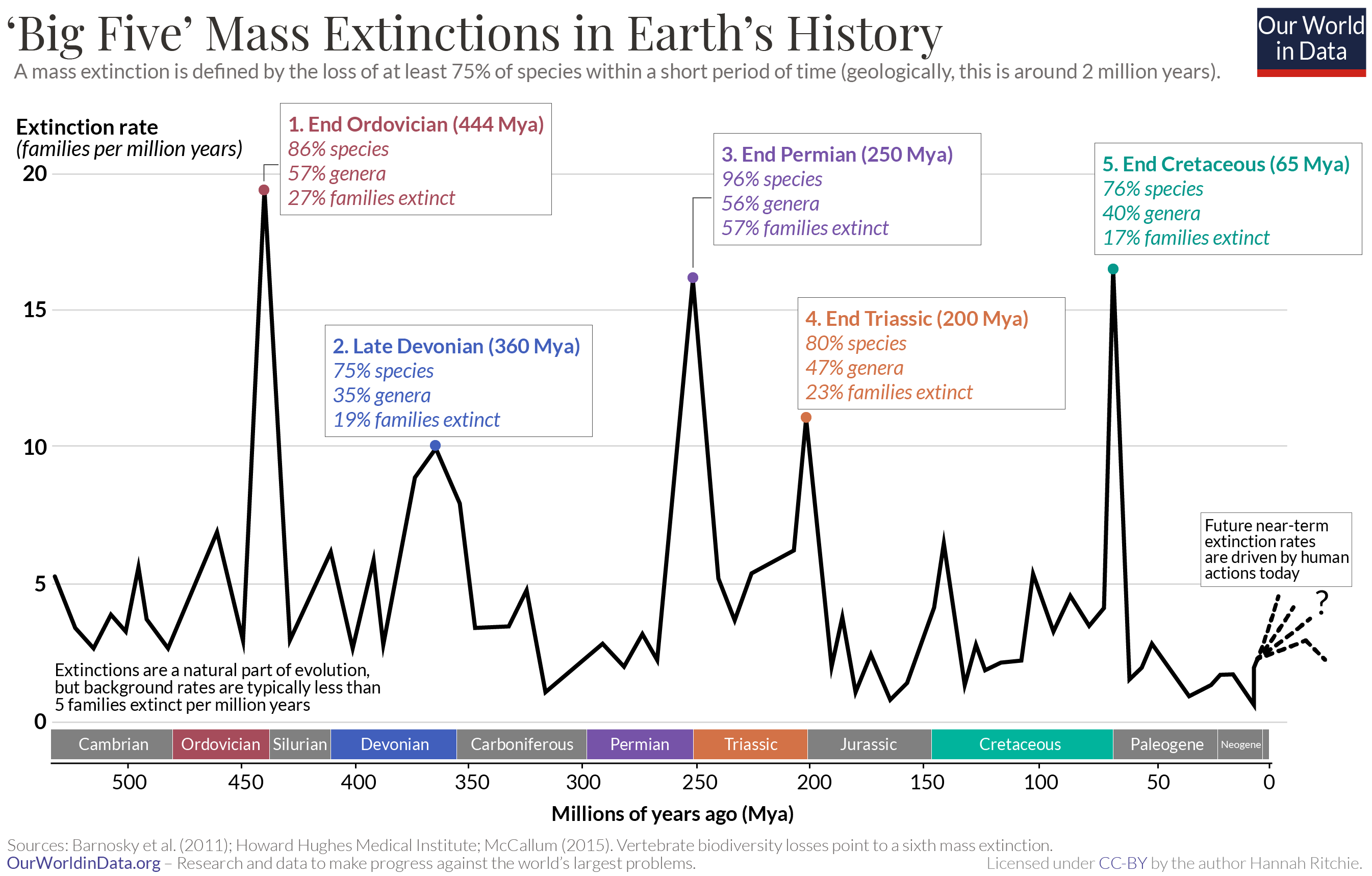
Now we understand the Earth is constantly slowly evolving. And that sometimes a huge change happens extremely rapidly. That’s where the distant past can inform the near future: we are quickly making our planet uninhabitable. We are currently on a trajectory that will likely put us firmly in the company of the five great mass extinction events.
The Big Five
Tamara’s talk was amazingly moving, talking about her work on the Pliocene, roughly 5 million years ago. Without any slides, her tight, vivid prose painted a picture of a world wildly different to ours, except with a worryingly similar CO2 concentration.
John struck a slightly more optimistic note, talking about his work looking at past changes in Australian lake systems, which has led to some promising restoration work.
A full house

Seeing that many people genuinely interested and asking sharp questions was heartening.
After the event formally ended, we all got to chatting with members of the audience. It was mostly encouraging. But I was also reminded of how, even the choir we were preaching to had enormous blind spots. One person suggested we could all just live more simply and get back to the land—you know, raising cattle and the like. I tried to delicately push back, but she was largely referring to her upbringing.
For better or worse, I had deleted a slide from my talk on exactly this point. Livestock account for roughly 60% of all mammal biomass on the planet. Agriculture takes up around a third of the entire land surface.
Where the biomass actually goes

Sadly, I don’t expect the trends to reverse. Extinction rates will keep climbing. Slow erosion of quality of life in wealthy countries, Climate crises will devastate poorer countries — droughts, floods, crop failures — will drive greater starvation, mass migration, and civil unrest. I suspect the devastating drought in Iran, which sparked mass protests and the subsequent brutal crackdown, will be shown to have been caused or at least exacerbated by climate change. That’s the model I see for the future: crises for vulnerable people and decline for people in wealthy countries.
It was a great night, but concerted focus on everything that’s going wrong on the planet is difficult. If you’re feeling stressed about the state of the world, you’re not alone and you’re not crazy!