I was recently invited to speak at Science in the Pub, Adelaide on the topic “The Fossil Forecast: Using the Past to Understand Our Climate Future”, alongside Dr Tamara Fletcher and Associate Professor John Tibby, both of Adelaide University. It was a genuinely lovely evening and well over a hundred people turned up and were thoroughly engaged throughout.
On stage
I spent the first half of my talk on the history and philosophy of science, which is one of my favourite topics. I talked a bit about the roots of Earth science. For most of the history of humanity and for most people today, the Earth is a passive stage upon which events happen. Not necessarily unchanging, but the changes were considered supernatural—Noah’s flood, for example.
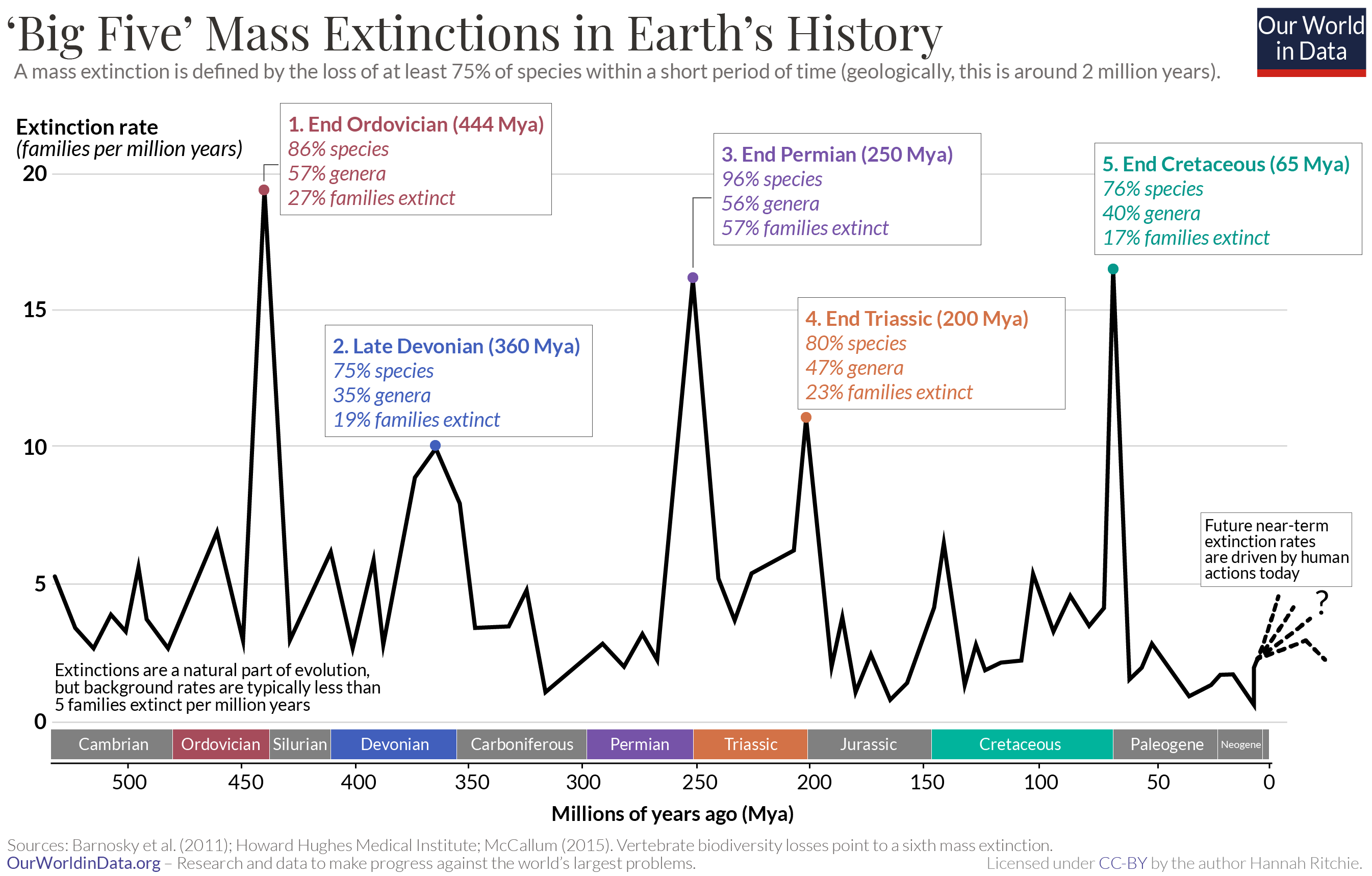
Now we understand the Earth is constantly slowly evolving. And that sometimes a huge change happens extremely rapidly. That’s where the distant past can inform the near future: we are quickly making our planet uninhabitable. We are currently on a trajectory that will likely put us firmly in the company of the five great mass extinction events.
The Big Five
Tamara’s talk was amazingly moving, talking about her work on the Pliocene, roughly 5 million years ago. Without any slides, her tight, vivid prose painted a picture of a world wildly different to ours, except with a worryingly similar CO2 concentration.
John struck a slightly more optimistic note, talking about his work looking at past changes in Australian lake systems, which has led to some promising restoration work.
A full house
Seeing that many people genuinely interested and asking sharp questions was heartening.
After the event formally ended, we all got to chatting with members of the audience. It was mostly encouraging. But I was also reminded of how, even the choir we were preaching to had enormous blind spots. One person suggested we could all just live more simply and get back to the land—you know, raising cattle and the like. I tried to delicately push back, but she was largely referring to her upbringing.
For better or worse, I had deleted a slide from my talk on exactly this point. Livestock account for roughly 60% of all mammal biomass on the planet. Agriculture takes up around a third of the entire land surface.
Where the biomass actually goes
Sadly, I don’t expect the trends to reverse. Extinction rates will keep climbing. Slow erosion of quality of life in wealthy countries, Climate crises will devastate poorer countries — droughts, floods, crop failures — will drive greater starvation, mass migration, and civil unrest. I suspect the devastating drought in Iran, which sparked mass protests and the subsequent brutal crackdown, will be shown to have been caused or at least exacerbated by climate change. That’s the model I see for the future: crises for vulnerable people and decline for people in wealthy countries.
It was a great night, but concerted focus on everything that’s going wrong on the planet is difficult. If you’re feeling stressed about the state of the world, you’re not alone and you’re not crazy!
I made a tool to convert spreadsheets of coordinates into decimal degrees. A version of the parser is below; follow the link to convert csv or (yuck) excel files.
-
For about the 137th time, I found exactly the data I was looking for, but the coordinates were recorded in a mix of Degrees, Minutes, Seconds; Decimal Minutes; and Decimal Degrees with just appalling formatting. I mean, lowercase o’s for degree symbols, copy/paste jobs resulting in whatever “¬” is.
Until now, I’ve always typed abominations like this into an online converter. But this chore is evergreen, so I decided to put in a little more effort so I’d never have to spend more than a few moments on it again. I created Decimancer, a little tool that tries its darnedest to make sense of strings of numbers to spit out nicely formatted decimal degrees. Try it out!
I made a tool to convert spreadsheets of coordinates into decimal
degrees. A version of the parser is below; follow the link to convert
csv or (yuck) excel files.
For about the 137th time, I found exactly the data I was looking for,
but the coordinates were recorded in a mix of Degrees, Minutes, Seconds;
Decimal Minutes; and Decimal Degrees with just appalling formatting. I
mean, lowercase o’s for degree symbols, copy/paste jobs resulting in
whatever “¬” is.
Until now, I’ve always typed abominations like this into an online
converter. But this chore is evergreen, so I decided to put in a little
more effort so I’d never have to spend more than a few moments on it
again. I created Decimancer, a little tool that tries its darnedest to
make sense of strings of numbers to spit out nicely formatted decimal
degrees. Try it out!
I spent two and a half years at ANU working with some really wonderful people. We kicked off a really cool pollen monitoring project, VegeMap, that I believe and hope has the momentum to continue without me.
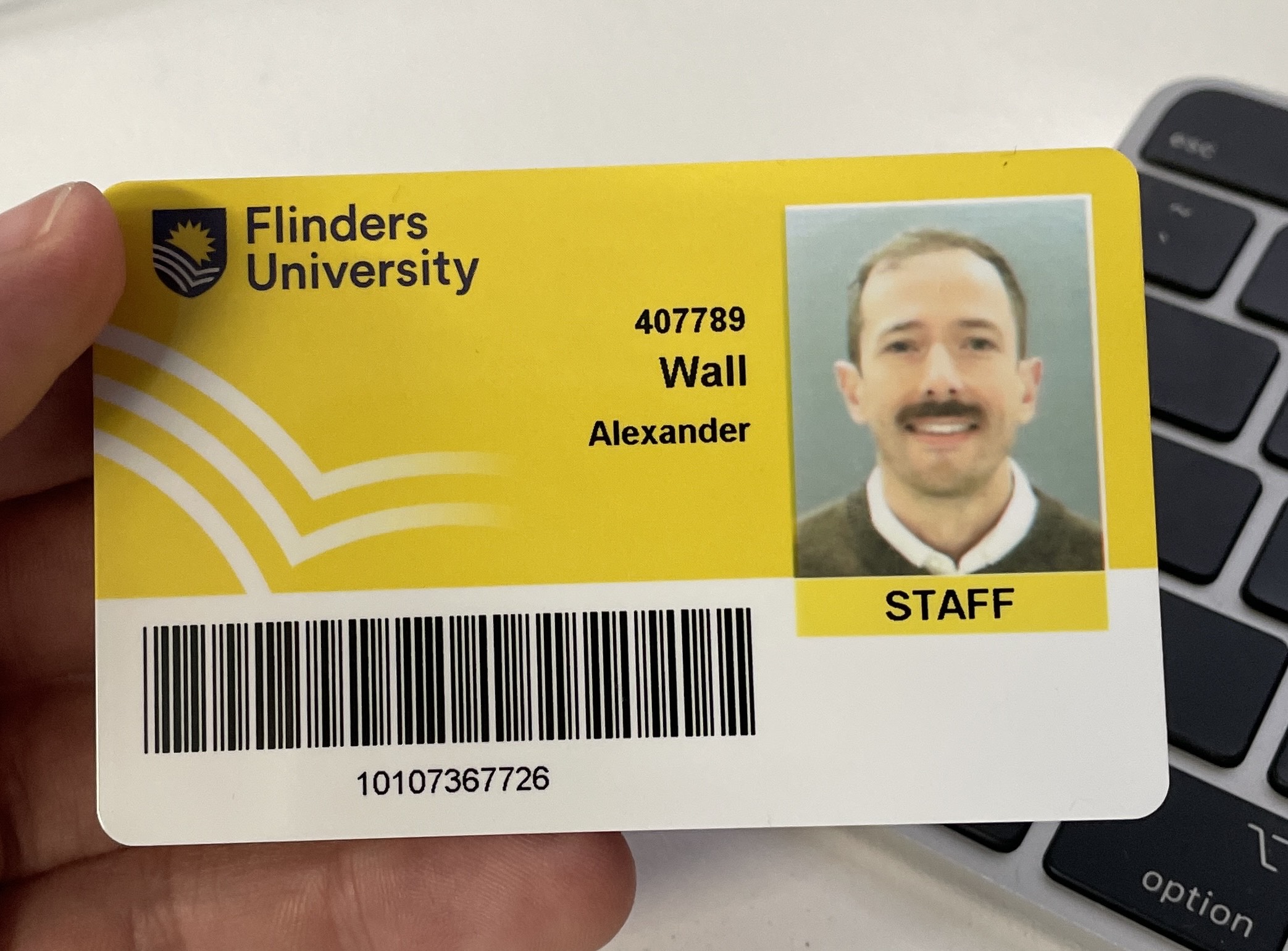
But I’m really excited to start a new role at Flinders University. I’ve joined the Global Ecology Laboratory | Partuyarta Ngadluku Wardli Kuu under the tutelage of Prof Corey Bradshaw. I’m excited to be stepping squarely into the world of modelling. It feels like a departure, but I will still be focused on palaeoecology and palaeoenvironments.
Another change will be refocussing to much more recent time, from 1000 years ago to the future! The job is part of CIEHF, the ARC’s Centre of Excellence for Indigenous and Environmental Histories and Futures. It’s really encouraging to see the ARC supporting Indigenous-led research on Country. This necessarily means that my project is very nebulous to start with; CIEHF projects are explicitly co-designed with Traditional Owners and researchers to incorporate multiple ways of knowing. It feels both counterintuitive and exciting to refrain from defining my own research questions and reimagine myself as an instrument for bigger questions built from a Venn diagram of Indigenous and scientific communities.
My interest in Earth systems is founded in my love and appreciation for our planet. I’ve always hoped that my work would contribute to understanding and conserving the natural world. This new role feels like a big step towards having a direct impact on actual conservation efforts done the right way. Let’s go!
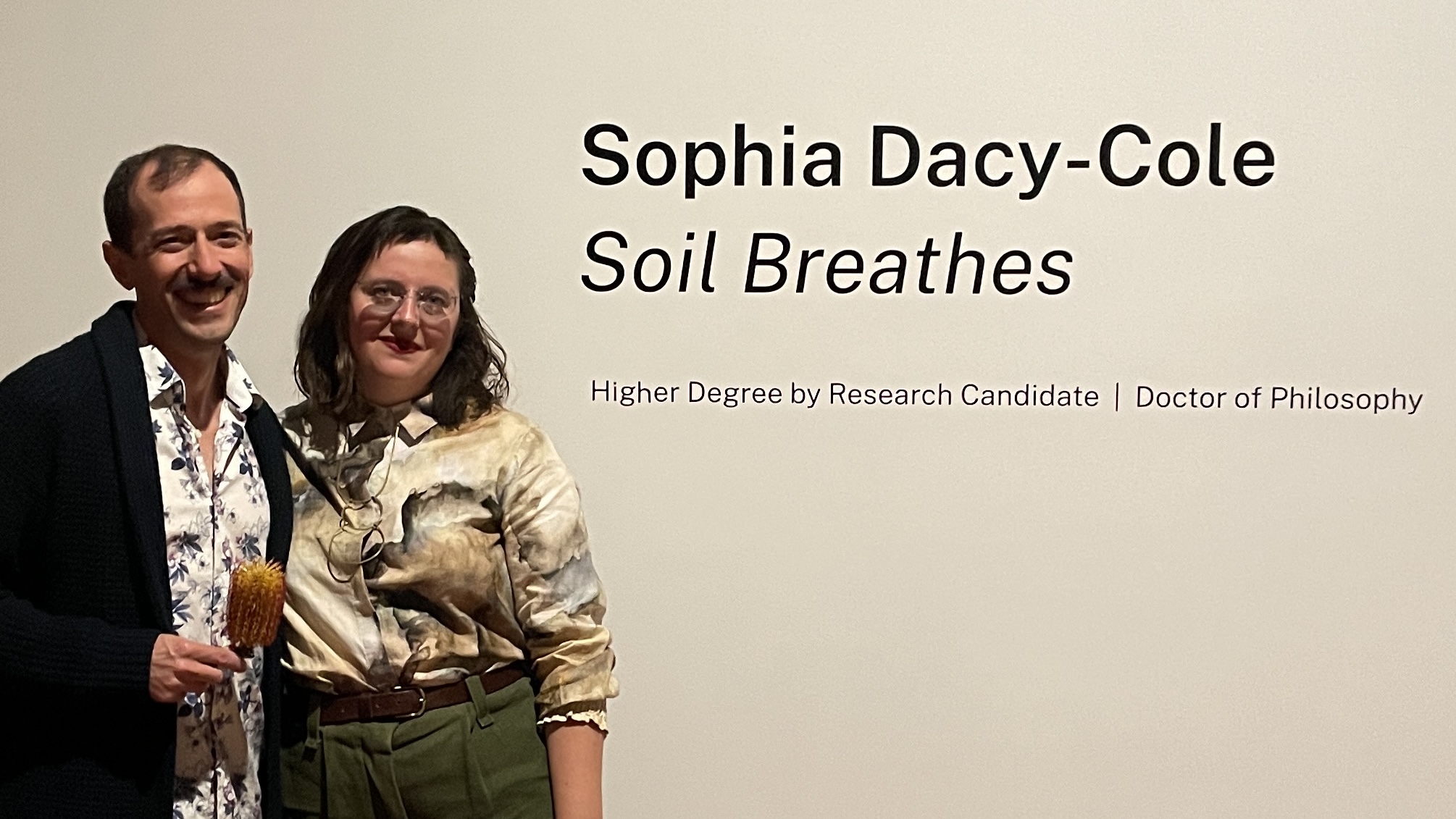
For the last 6 months, I’ve had the unexpected pleasure of co-advising a PhD student in the school of art and design. A major part of her studies is creating an exhibition, which is a really fascinating concept to me, being a scientist with little idea about such things. The exhibition has already come and gone, but you can see bits of it on her website.
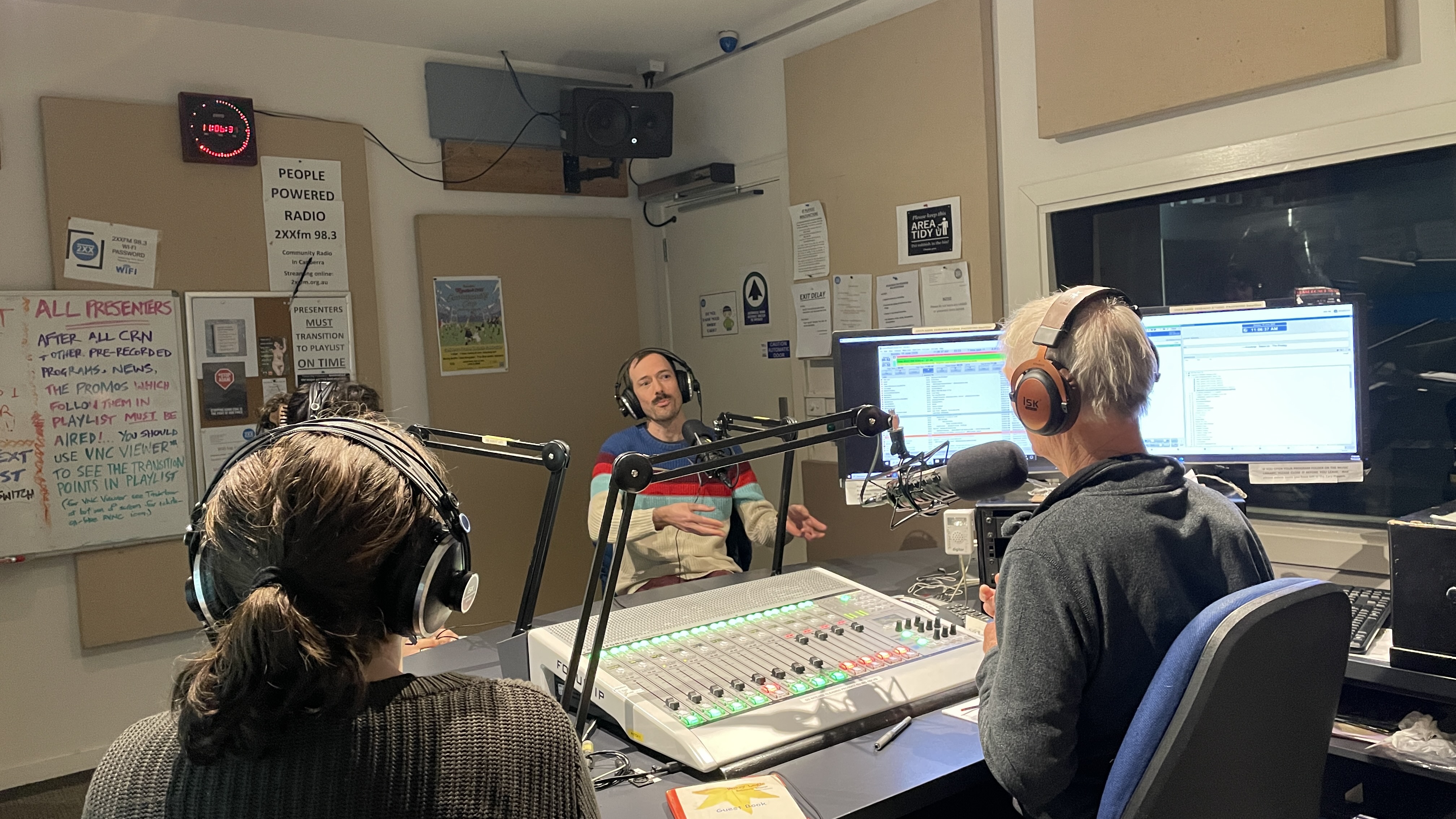
Her research literally being on exhibit, the local radio station took note of it. She was invited on their weekly science show/podcast, Fuzzy Logic. She invited me to join her and we spent an hour taking about the intersection of art, science, and soil. Check it out!
Wild time at Kiola, teaching undergrads about palaeoecology and some hands-on coring.
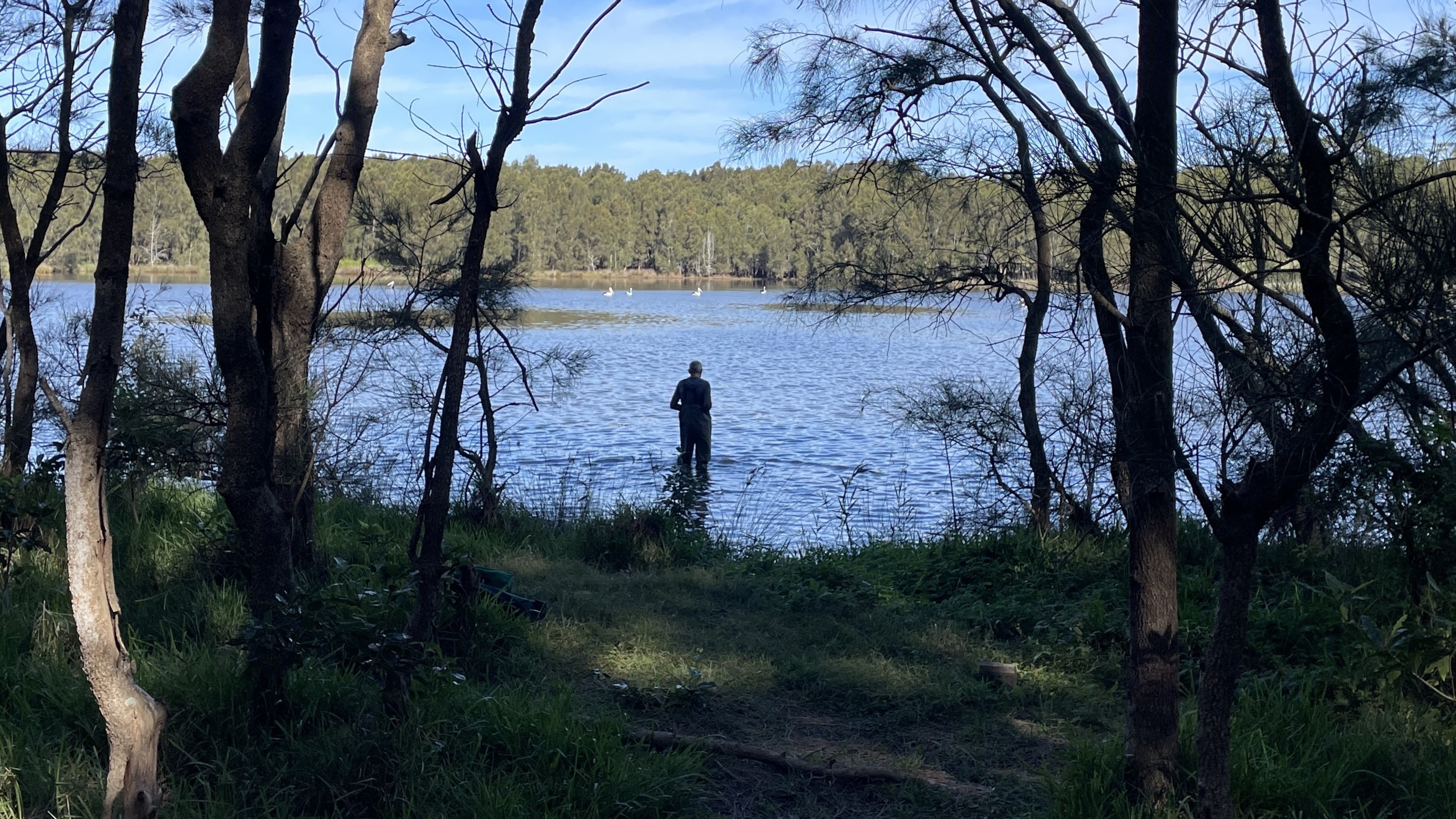
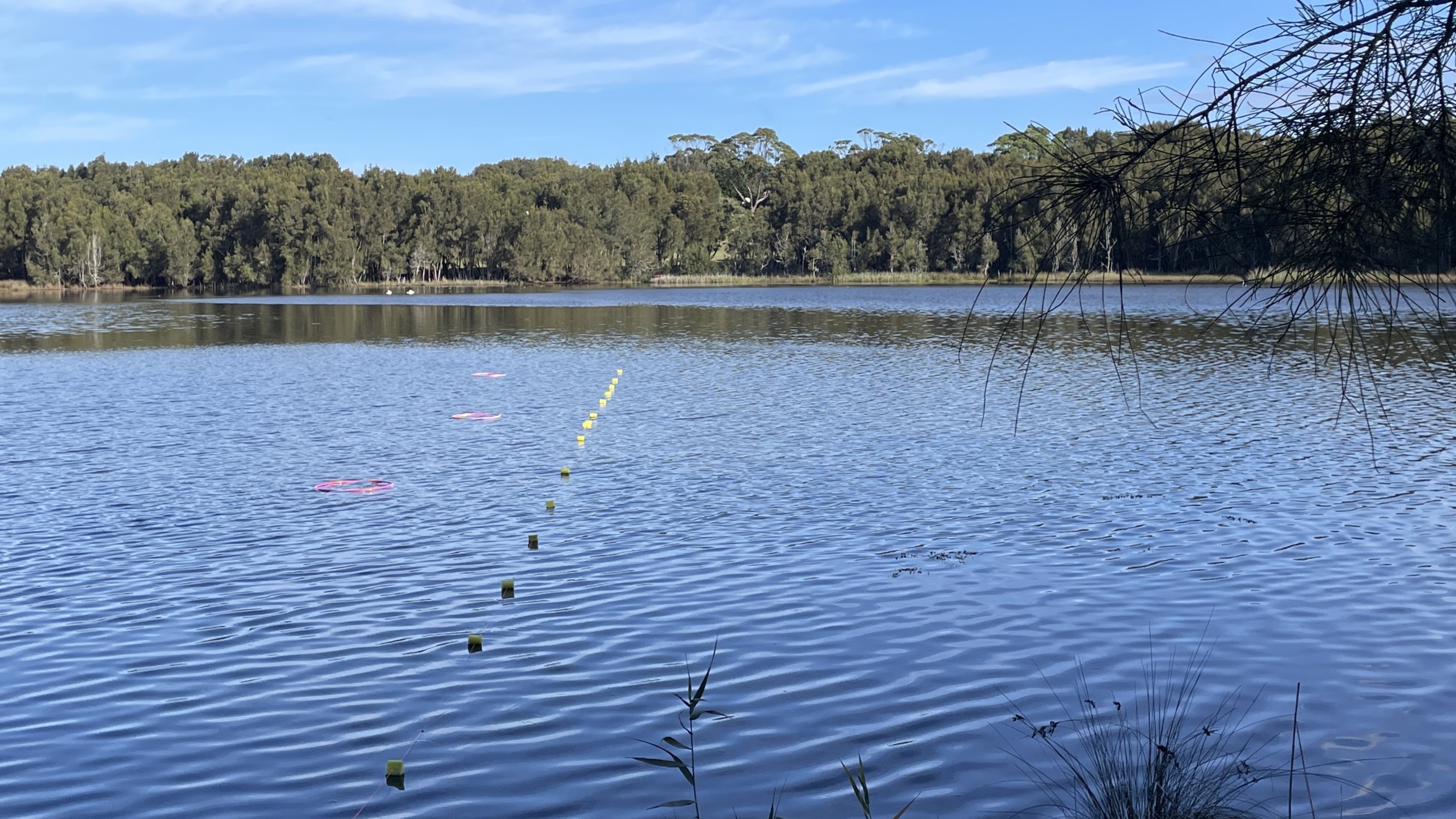
We arrived on Monday for a warm welcome to Country. While the students got a tour around the lands and waters, we demonstrators got wet in beautiful Murramarang Lagoon, also called Swan Lagoon.
Murramarang Lagoon
We had some pretty impressive hosts. A wedge-tailed eagle. Australia’s largest raptor, circled us for most of our set-up. We also had Australian pelicans, Australia’s largest flying bird, paddling nearby. No emus, so we missed the hat trick there.
Wedge-tailed observer
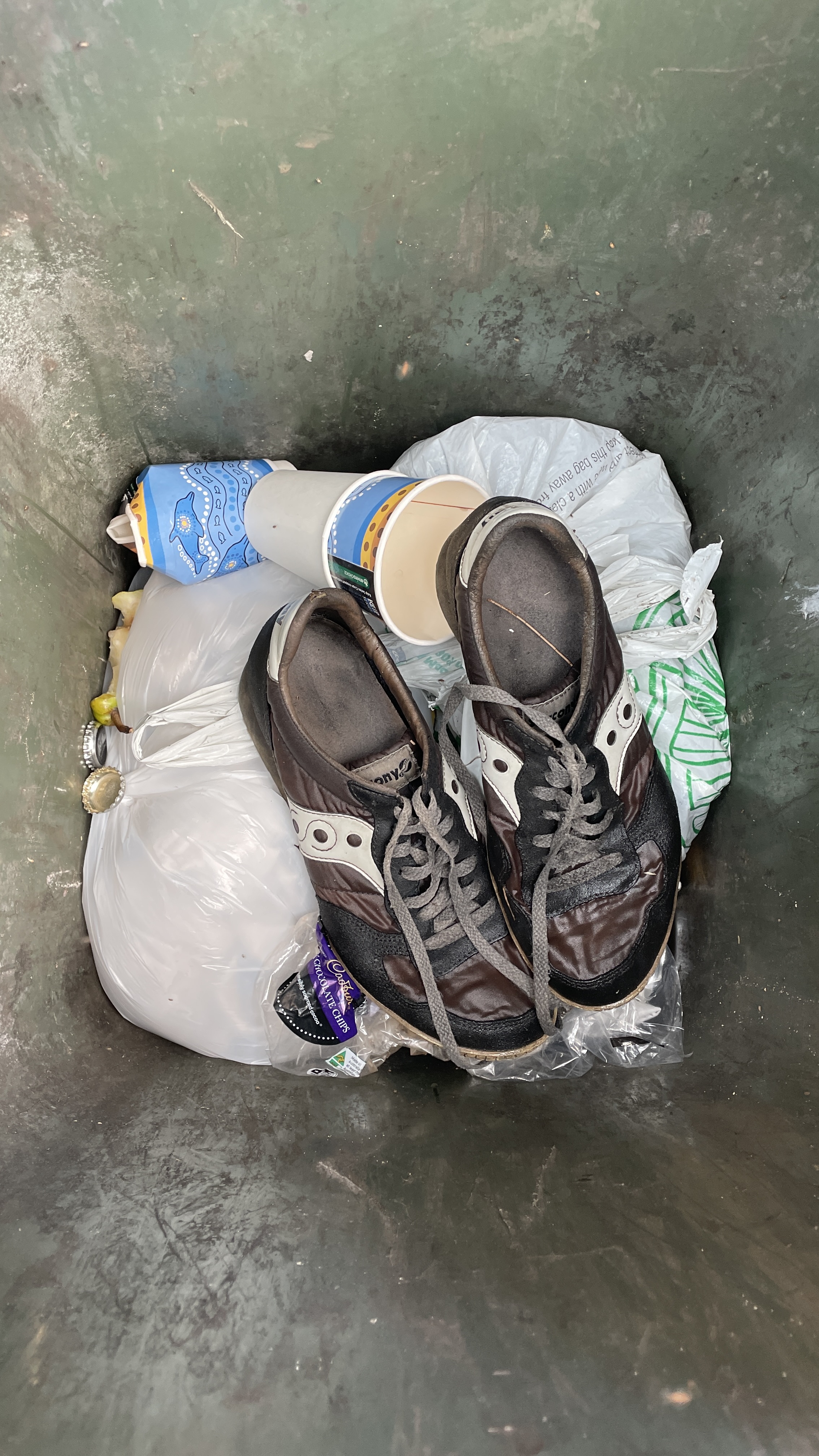
Tuesday was our only full day and it started earlier than planned. We had settled into the lovely cabins on the Kiola campus. About halfpast midnight, we awoke to a shrill, brain-rattling siren screaming down from the 4 meter high ceilings and echoing off the tile floors. After discovering the smoke alarm was seemingly immune to reset by tossed shoe, we went to the nearby lab and found a step ladder and broom. After some prodding, we were able to quieten the alarm.
Just after settling back into our beds, the piercing din resumed. Thankfully, the caretaker answered his phone, gave us the code to the key safe, and told us where to find a proper ladder. Not to mention drove himself the half hour to come help us. With the ladder, we managed to get the alarm down and replace the battery.
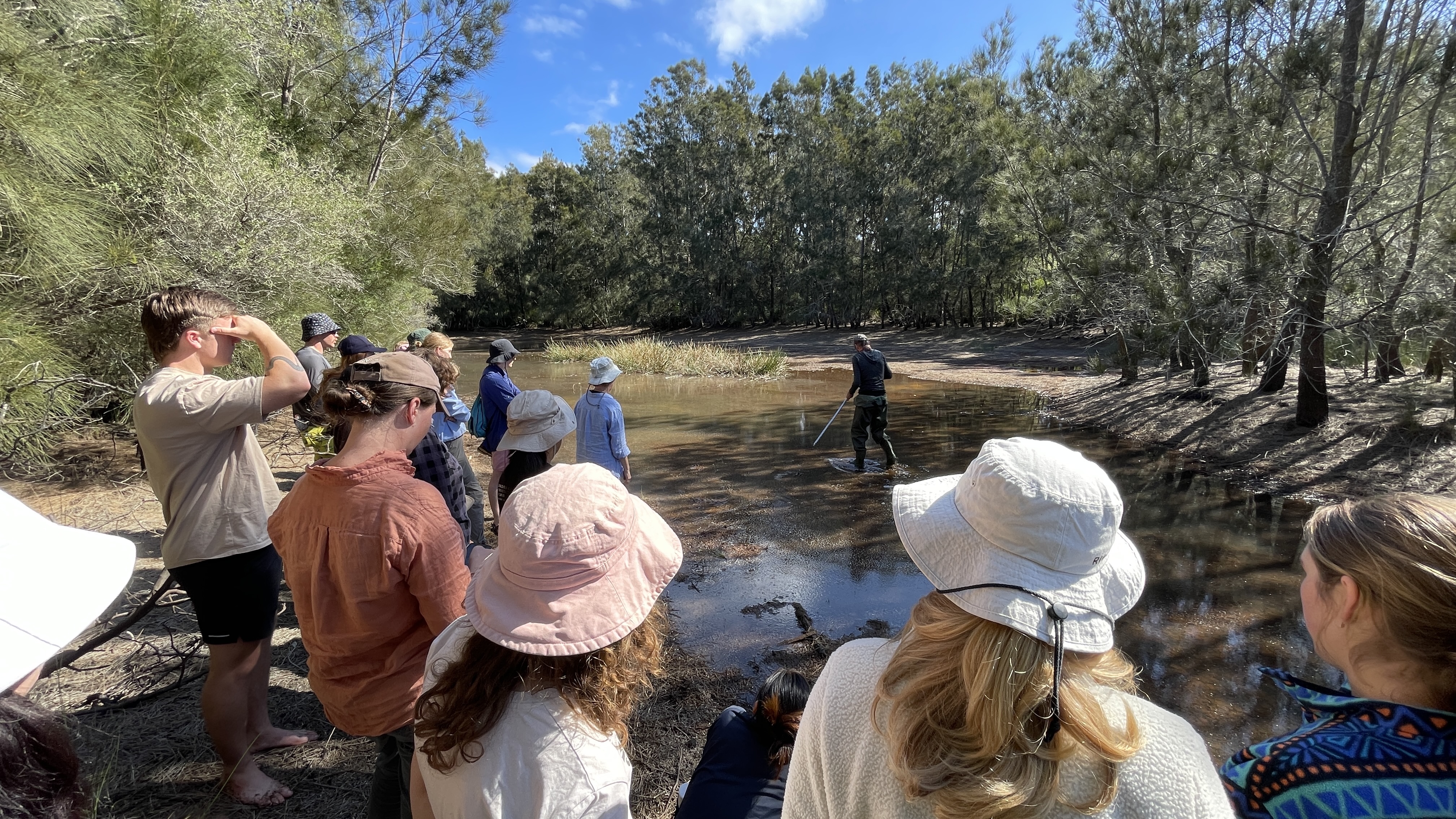
Despite the interruption to our sleep, the rest of the day was very productive. The students all had a go with coring in waist-deep water that got deeper as one slowly sunk into the rotten egg mud.
Our coring playground
In the afternoon I walked the students through some basic time-series analysis in R, using the benevolent Simon Connor’s code. And capped the evening off with a raucous round of trivia!
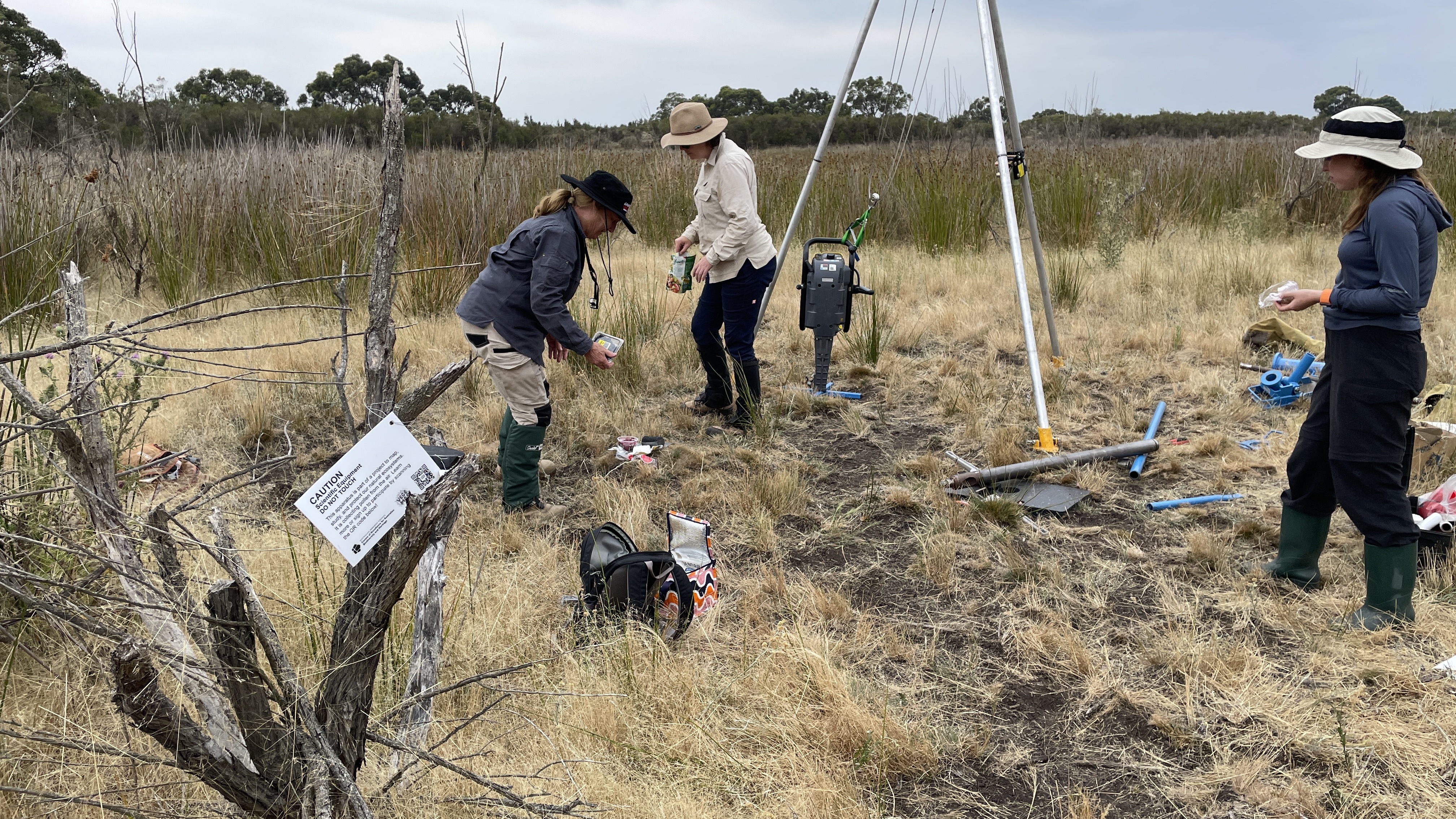
I recently had the opportunity to do some sediment coring on French Island!
We’re hoping to learn about the impacts colonisation had on plants and fire regimes.
It was a gorgeous place, absolutely teeming with wildlife.
Coring setup
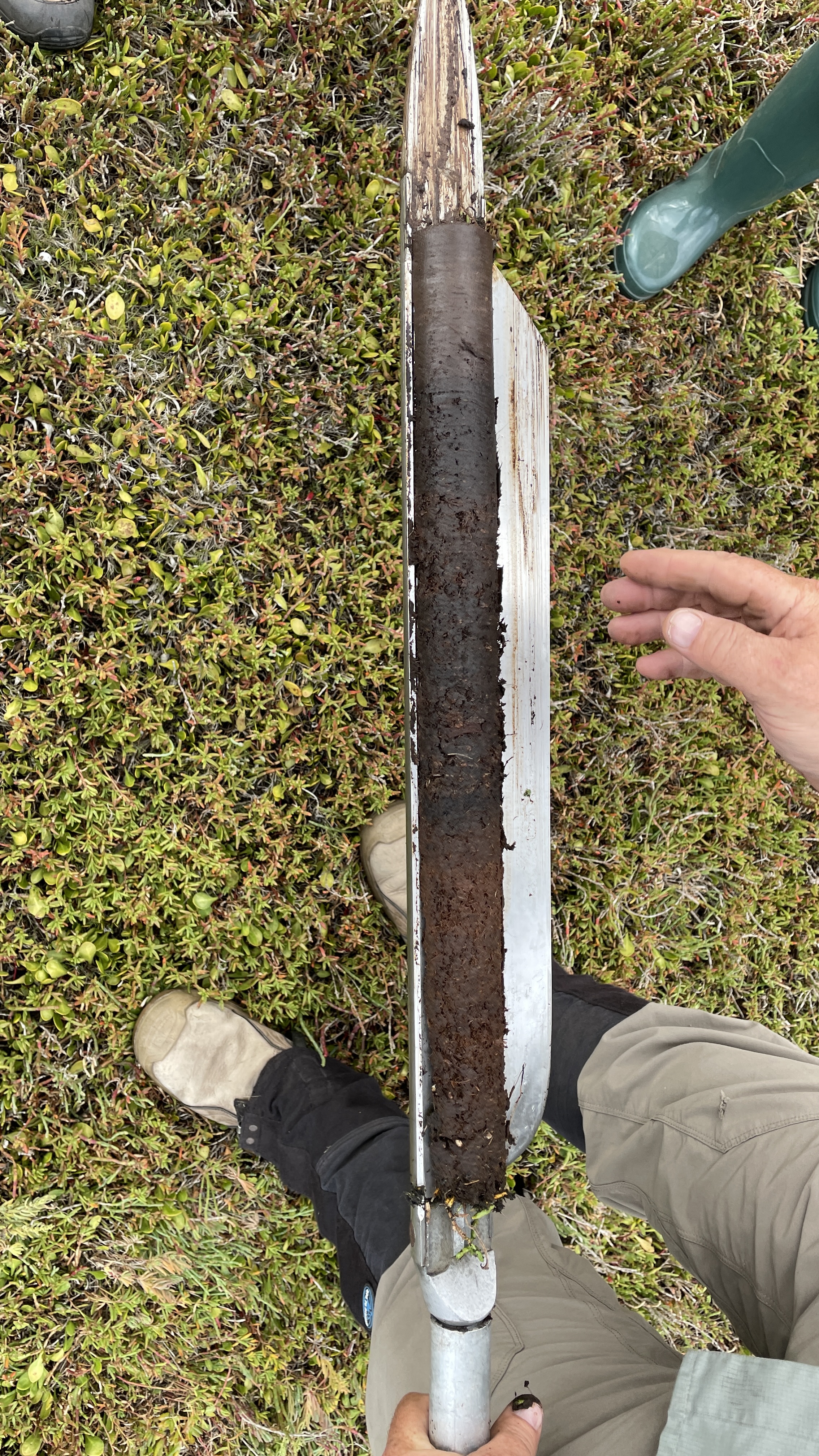
D-section
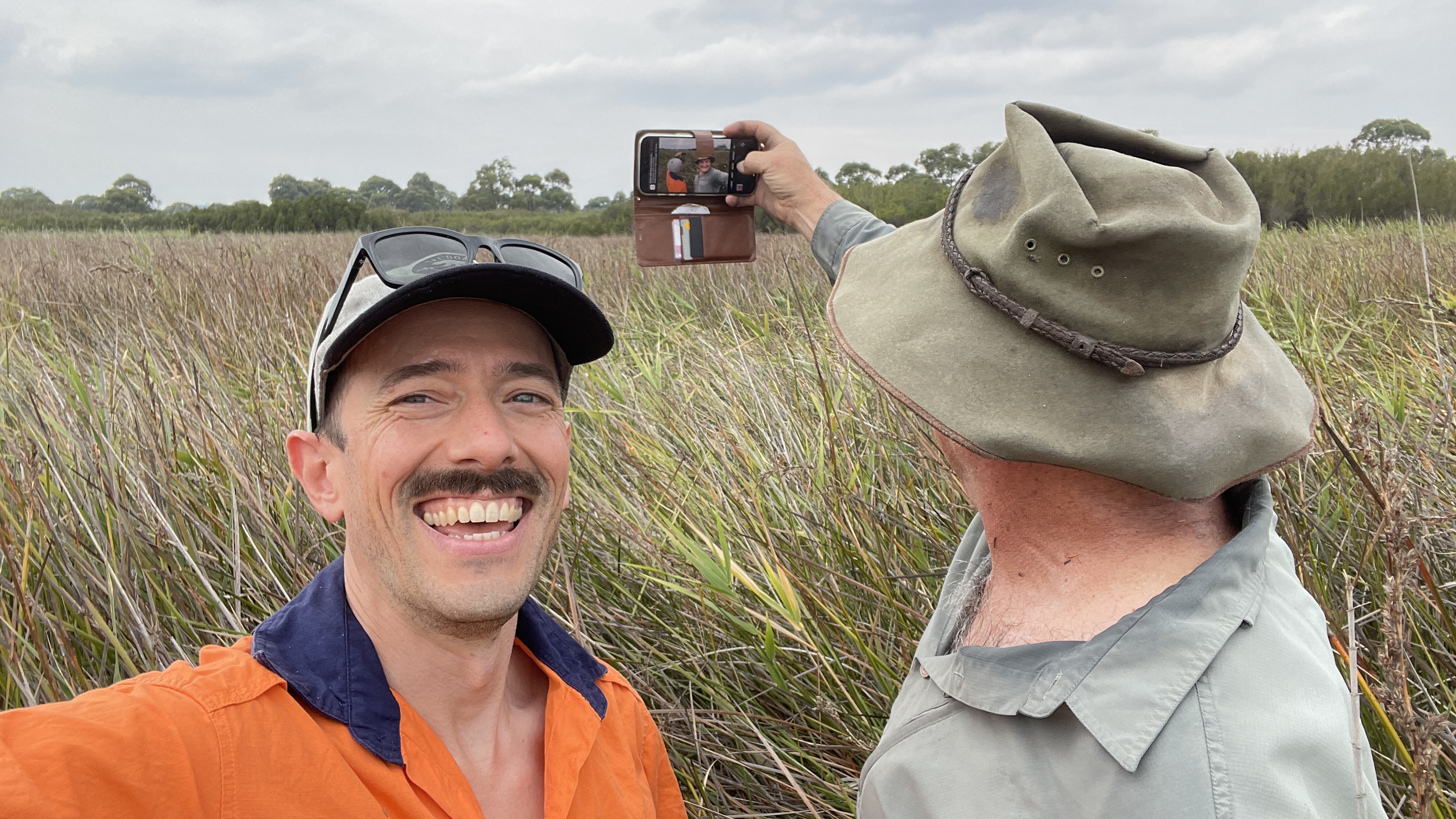
The rare double-selfie
Sadly, gale force winds prevented an archaeology field course from joining us to learn about coring.
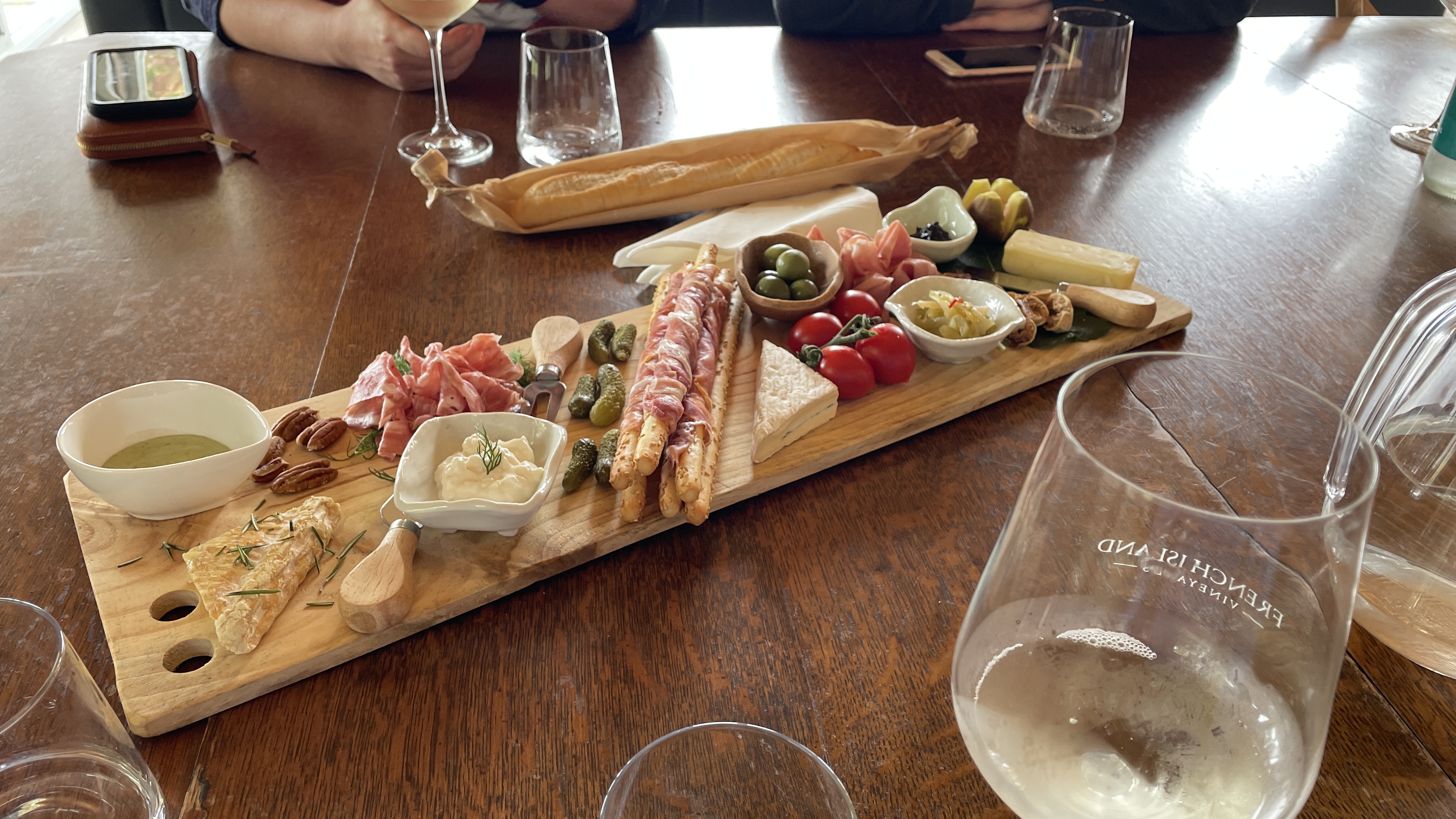
We were forced to find another way to spend our Sunday afternoon.